Kategorie: Commons

Nur Denken oder Essen?

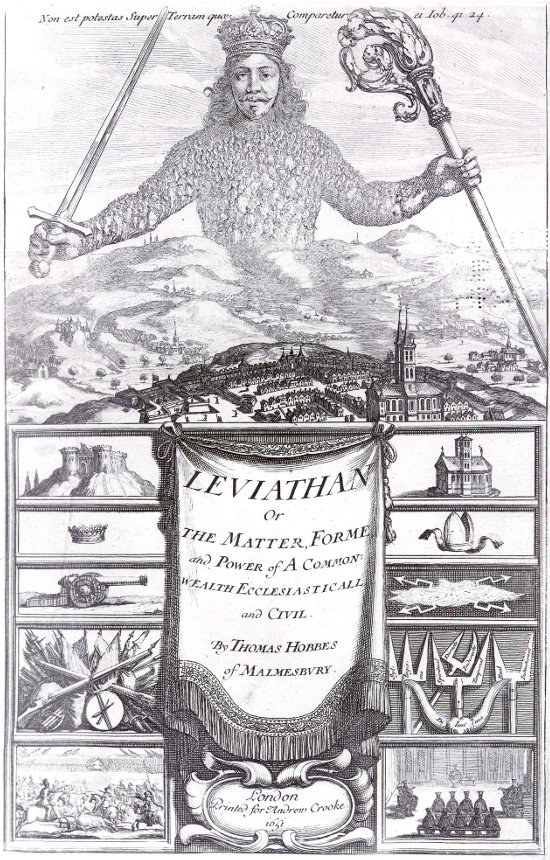
Leviathan (Klicken zum Vergrößern)

Zwei Menschen können wohl den selben Gedanken denken, aber nicht dasselbe Stück Brot essen

Dieses Zitat von Thomas Hobbes (aus: Leviathan – mit dem er den „Kampf aller gegen alle“ begründet, siehe auch das Bild rechts, zum Vergrößern klicken) wird einem immer wieder entgegen gehalten, wenn man von dem Modell der Freien Software als „Keimform“ einer nachkapitalisti­schen, nicht geldlogischen Gesellschaft spricht. Der kategoriale Unterschied zwischen virtuellen Gütern und körperlichen, sinnlich erfahrbaren wird zum Dauer-Gegenargument: Was in der Welt der Bits und Bytes möglich sei, verschließe sich in Welt der handfesten Güter von selbst und dauer­haft!

(mehr …)

Commons Movement Coins New Phrases

[via OnTheCommons, deutsche Übersetzung unten]

The vocabulary of the commons is expanding as people increasingly realize the practical value of this concept. No longer simply a noun, the commons now is talked about as a verb and adjective.

Commons: What we share. Creations of both nature and society that belong to all of us equally, and should be maintained for future generations.

Commons-based society: A society whose economy, political culture and community life revolve around promoting a diverse variety of commons.

Commons-based solutions: Distinctive innovations and policies that remedy problems by helping people manage resources cooperatively and sustainably.

Commoners: In modern use, the people who use a particular commons; especially those dedicated to reclaiming and restoring the commons.

Commoning: A verb to describe the social practices used by commoners in the course of managing shared resources and reclaiming the commons. Popularized by historian Peter Linebaugh.
(mehr …)

Gemeingüterreport: Wohlstand durch Teilen

Titelseite des GemeingüterreportsSilke Helfrich, Rainer Kuhlen, Wolfgang Sachs und ich haben ein kleines Buch – einen Report – geschrieben. Es geht darin – wieder einmal – um die Gemeingüter. Während Silkes letztes Buchprojekt zum Thema (in dem ich mit einem Beitrag [PDF] vertreten bin) recht dick und wissenschaftlich ausgefallen ist, ging es uns diesmal um eine leicht verständliche und gut lesbare Einführung ins Thema.

Wir erzählen die Geschichte und Philosophie der Commons in vielen kleinen Geschichten, die insgesamt hoffentlich ein gutes Bild davon vermitteln, was Gemeingüter ausmacht, wie sie funktionieren und warum sie wesentlich sind. Auf 50 mit vielen Zitaten, Grafiken und bunten Bildern geschmückten Seiten führen wir so in ein Thema ein, das in der Öffentlichkeit zuletzt mit dem Nobelpreis für die Commons-Forscherin Elinor Ostrom Schlagzeilen gemacht hat. Keimform-Leser/innen sind die Commons natürlich bestens vertraut, trotzdem glaube ich dass bei Lektüre des Reports jede/r noch die eine oder andere Erkenntnis oder Anregung finden wird!
(mehr …)

Commons und Eigentum — Vortrag

Frisch vom BUKO-Commons-Seminar in der Villa Locomuna in Kassel hier mein Vortrag zum Thema Commons und Eigentum — entweder als Download (PDF) oder direkt zum Ansehen (diesmal leider ohne Ton):

The Earth’s the Limit (1)

The vision of post-scarcity is a popular but controversial meme in the debates of peer production. Post-scarcity envisions a world where everything is free as in free beer, where no payment or accounting is requirement for anything you use. Post-scarcity ideas usually rely very strongly on advanced technology, postulating that almost everything can be automated—or at least, everything that’s not fun and pleasant to do. Post-scarcity theorists also believe that advanced technology can provide enough natural resources and enough energy in order to satisfy everyone’s needs and wishes, possibly through extracting resources from space or through speculative future technologies such as nuclear fusion power.

A weak form of post-scarcity thinking is present in one of the founding documents of the free software movement, Richard Stallman’s GNU Manifesto (“weak” because there are still necessary tasks that are neither fun nor automated away):

(mehr …)

Prinzipien der Bildung von Communities (nach Ostrom)

Nobelpreisträgerin Elinor Ostrom hat zahlreiche Beispiele für funktionierende Commons (Gemeingüter) und die sie tragenden Communities (Gemeinschaften) gesammelt. Aus dieser Erfahrung hat sie Prinzipien bei der Bildung von »Gruppen«, »Institutionen«, »Netzwerken« oder einfach »Communities« abgeleitet. Diese sind (nach Hartzog):

  1. Die Grenzen der Gruppe sind klar definiert.
  2. Die Nutzungsregeln der kollektiven Güter sind gut auf lokale Bedürfnisse und Bedingungen abgestimmt.
  3. Die meisten Individuen, die von solchen Regeln betroffen sind, können sich an der Veränderung der Regeln beteiligen.
  4. Die Rechte der Mitglieder der Gemeinschaft, ihre eigenen Regeln zu entwickeln, wird von externen Autoritäten respektiert.
  5. Es gibt ein System der Beobachtung des Verhaltens der Mitglieder durch die Mitglieder selbst.
  6. Es wird ein abgestuftes Sanktionssystem verwendet.
  7. Die Mitglieder der Gemeinschaft haben Zugang zu niedrig-schwelligen Konfliktlösungsmechanismen.

Das ist doch eine gute Grundlage für eine Diskussion!

[Update: Der zu ergänzende 8. Punkt, der die Communities im engeren Sinne überschreitet, heißt »Eingebettete Institutionen« und meint die Verknüpfung der Commons über mehrere Ebenen (»polycentric governance«]

Manifest der kulturellen Allmende

The Public Domain Manifesto

Entstanden im Rahmen des von der Europäischen Union geförderten thematischen Forschungsnetzwerks COMMUNIA.

Deutsche Fassung vom 26. Januar 2010. Übersetzung durch Christian Hufgard und Klaas Schmidt. Auch als Download in den Formaten PDF und ODT.

Le livre, comme livre, appartient à l’auteur, mais comme pensée, il appartient – le mot n’est pas trop vaste – au genre humain. Toutes les intelligences y ont droit. Si l’un des deux droits, le droit de l’écrivain et le droit de l’esprit humain, devait être sacrifié, ce serait, certes, le droit de l’écrivain, car l’intérêt public est notre préoccupation unique, et tous, je le déclare, doivent passer avant nous.
Victor Hugo, 1878: « Discours d’ouverture du Congrès littéraire international de 1878 ».

Our markets, our democracy, our science, our tradition of free speech, and our art all depend more heavily on a Public Domain of freely available material than they do on the informational material that is covered by property rights. The Public Domain is not some gummy residue left behind when all the good stuff has been covered by property law. The Public Domain is the place we quarry the building blocks of our culture. It is, in fact, the majority of our culture.
James Boyle, 2008: “The Public Domain”, p. 40f.

Einleitung

Kulturelle Allmende, wie wir sie verstehen, bedeutet Reichtum an freien Informationen und Wissen. Einen Reichtum, der nicht durch Urheberrechte oder sonstige Beschränkungen, welche den Zugang oder die Verwendung erschweren, belastet ist.

(mehr …)

Freier Film »Valkaama«

Der Freie Film — oder Open Source Film — Valkaama ist erschienen. Der Name Valkaama setzt sich aus den beiden finnischen Worten valkama (Heimat) und kaamos (Polarnacht) zusammen. Die Filmmusik stammt von Michael Georgi. Angucken oder Download hier. Oder die DVD bestellen. Die Filmemacher schreiben:

Es war ein langer, schwerer Weg bis zum fertigen Film und trotzdem geben wir ihn frei: Valkaama wird einer der wenigen Creative Commons lizensierten Filme in Spielfilmlänge.

Mehr noch… durch den von uns gewählten Open Source Ansatz und der konsequenten Benutzung der Creative Commons by-sa 3.0 Lizenz sowohl für den Film als auch für die Quellmaterialien, betritt Valkaama fast komplettes Neuland. Wir hoffen, damit ein positives Beispiel zu geben so dass noch mehr „Offene“, beziehungsweise „Freie“ Filme folgen werden und auch mehr und mehr Quellmaterial unter Lizenzen verfügbar sein wird, die für freie Inhalte geeignet sind.

Yep!

[via]

Wenn die Cola offen ist…

… dann fehlt nicht der Schraubverschluss, sondern dann steht das Rezept für ein Cola-Getränk allen Interessierten frei zur Verfügung — auf das er oder sie sich eine leckere Cola zusammenrührt. Das Cola-Wissen ist nicht mehr Geheimnis einzelner Konzerne, sondern ist als OpenCola-Rezept unter GPL-Lizenz ein Gemeingut geworden. Die abgebildete OpenCola wurde 2004 in Kanada hergestellt. Heute gibt es eine Ubuntu-Variante (verkauft in Schweden) oder Goggi-Cola (nur in Bern/Schweiz) oder CubeCola usw. Dreist ist allerdings, das freie Rezept als »Shareware« für das iPhone zu verkaufen.

Am besten ist immer noch die Nerd-Trink-Anleitung auf der abgebildeten Cola-Dose:

#!/usr/bin/perl
open CAN, „excitedly“; join ($can, $mouth); while ($colaRemaining > 0)
{if ($reallyThirsty) {$chug} else {$sip}}
dump IN_RECYCLING_BOX; IN_RECYCLING_BOX: return;

Dann kann ja nix mehr schief gehen… [via]

Commons in a taxonomy of goods

[Deutschsprachige Version]

Commons are common pool resources. Commons are common goods. Commons are social relationships. You can find all of these descriptions for the term. Which is the correct one? All three versions are valid—at the same time!

The word „common“ is the best starting point for the analysis. The common thing within a commons are the resources, which are used and cared for, are the goods resulting from joint activities, and are the social relationships emerging from acting together. These three aspects are so different for all commons, that no one could describe them in a reasonably complete manner.

Commons are at odds with commodities, although a commodity is a good which is produced in a specific social form using resources. But it is usual that traditional economics only consider resources as social forms of production in a marginal way or even not in any way. I will try to overcome this limitation by using the following taxonomy of goods [Illustration 1]. I decide to put the concept of „good“ into the center, while describing from the triple definition explained above: as a common good, as a resource and as a social form.

Taxonomy of Goods

Illustration 1: Proposed taxonomy of „goods“

(mehr …)